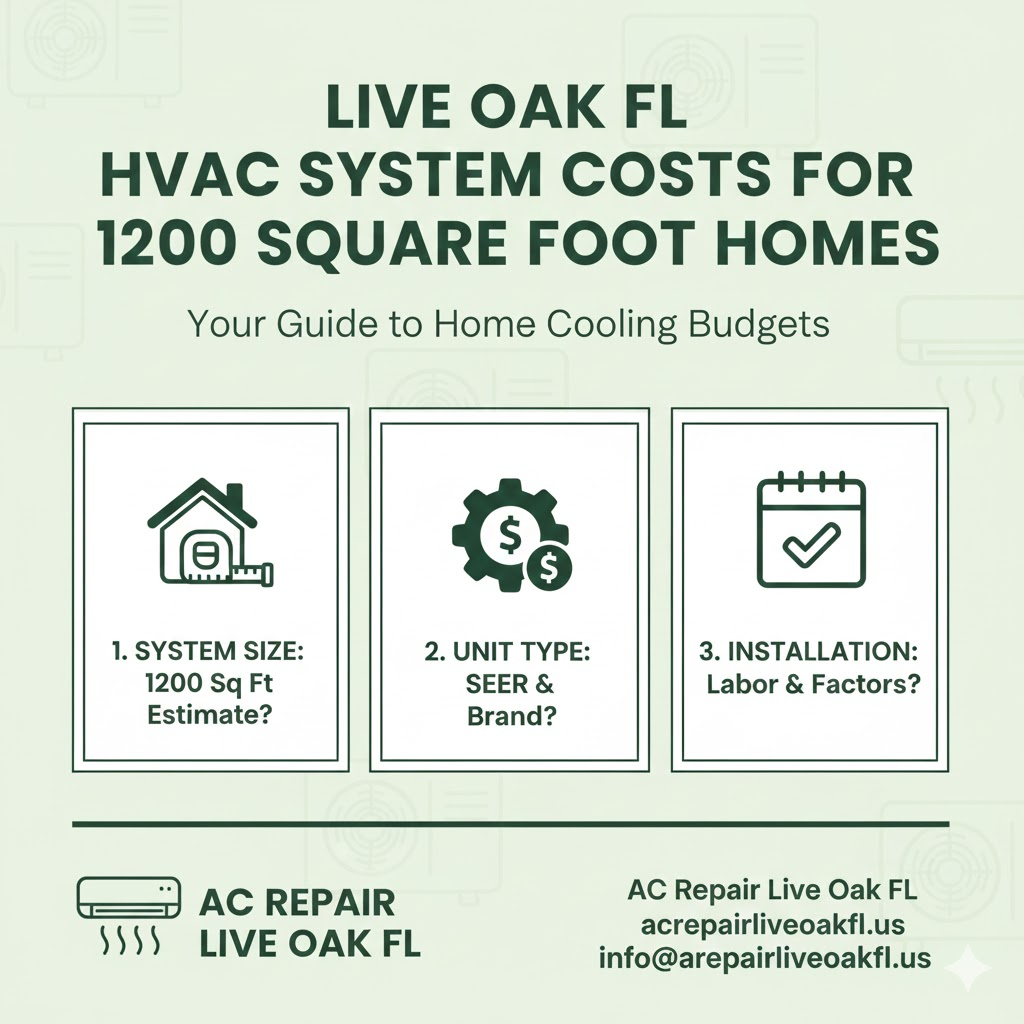
Homeowners with 1,200 square foot properties in Live Oak need accurate cost information when budgeting for new HVAC systems. The total investment includes equipment, installation labor, permits, and necessary modifications to existing infrastructure. Understanding the factors that influence pricing helps you evaluate contractor quotes and make informed purchasing decisions.
Table of Contents
- Average HVAC System Costs for 1200 SF Homes
- System Sizing Requirements for This Square Footage
- Equipment Quality, Price Tiers, and replacement cost considerations are essential for homeowners.
- Installation Complexity Factors
- Energy Efficiency and Long-Term Costs
- Financing and Payment Options
- FAQs
- Summary
Average HVAC System Costs for 1200 SF Homes
Complete HVAC system replacement for a 1,200 square foot home in Live Oak typically costs $4,500 to $8,500 depending on equipment quality, efficiency ratings, and installation complexity. This price range includes equipment, professional installation, permits, and standard startup procedures.
Budget systems fall in the $4,500 to $5,500 range, mid-tier equipment costs $5,500 to $7,000, and premium high-efficiency systems reach $7,000 to $8,500 or more.
Property owners can consult with AC Repair Live Oak FL for detailed quotes based on specific home conditions and equipment preferences.
Cost Breakdown Components
Equipment typically represents 40% to 50% of total system costs, or $2,000 to $4,000 for appropriately sized units. Installation labor accounts for 30% to 40%, ranging from $1,800 to $3,200 depending on complexity.
Additional costs include permits ($75 to $150), disposal of old equipment ($100 to $200), thermostat upgrades ($100 to $400), and potential modifications to ductwork or electrical systems.
National Cost Comparisons
According to HomeAdvisor, the national average for complete HVAC system replacement is $5,600, placing Live Oak costs close to national norms. Regional variations reflect labor rates, permit requirements, and local market competition.
Florida’s lack of heating requirements sometimes allows homeowners to install cooling-only systems rather than complete heat pump or dual-fuel systems, potentially reducing costs by $500 to $1,200.
System Sizing Requirements for This Square Footage
Proper system sizing is critical for efficiency, comfort, and equipment longevity, particularly in larger homes. Homes around 1,200 square feet typically require 2 to 2.5-ton air conditioning systems, though multiple factors influence the final calculation.
Manual J Load Calculation
Professional contractors perform Manual J load calculations to determine precise heating and cooling requirements. This calculation considers insulation levels, window size and orientation, ceiling height, and local climate data.
According to the average cost of installing a new air conditioner, proper budgeting is crucial. Air Conditioning Contractors of America, Manual J calculations are the only accurate method for system sizing, as rules of thumb frequently result in oversized or undersized equipment, which can lead to increased energy bills for homeowners.
A 1,200 square foot home with average insulation, standard 8-foot ceilings, and moderate window area typically requires 24,000 to 30,000 BTU of cooling capacity, corresponding to a 2 to 2.5-ton system.
Factors Affecting Size Requirements
Homes with poor insulation or extensive glass areas require larger systems than well-insulated homes of the same square footage. Cathedral ceilings or second-story spaces add volume that increases cooling requirements.
Southern and western exposures with large windows increase solar heat gain, requiring additional capacity. Homes with significant shade from trees or adjacent structures need less capacity than homes in full sun.
Occupancy patterns and internal heat sources including appliances and electronics also affect load calculations for new system installations.
Consequences of Incorrect Sizing
Undersized systems run continuously during hot weather, never achieving comfortable temperatures and consuming excessive electricity, leading to higher energy bills. These systems experience accelerated wear from constant operation.
Oversized systems short cycle, turning on and off frequently without proper dehumidification. This operation pattern wastes energy, reduces comfort, and shortens equipment life.
Equipment Quality and Price Tiers
HVAC manufacturers produce equipment at multiple quality levels with varying features, efficiency ratings, and price points. Understanding these tiers helps align purchase decisions with budget and priorities.
Budget Systems ($4,500 to $5,500)
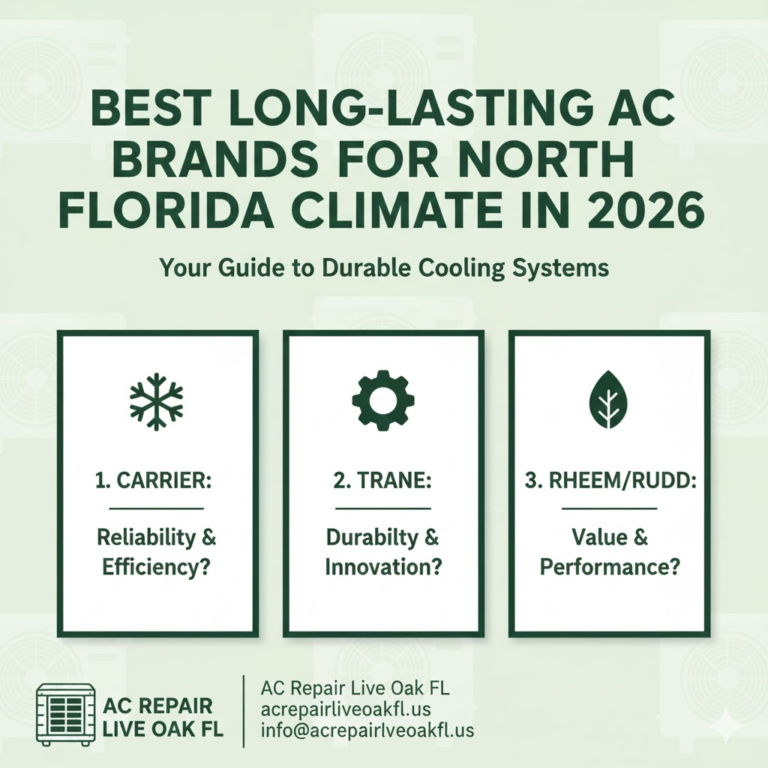
Entry-level systems from manufacturers like Goodman, Coleman, and economy models from major brands deliver basic cooling performance. These systems typically achieve 14 to 15 SEER efficiency ratings.
Budget equipment uses single-stage compressors, basic controls, and standard warranties. Component quality meets industry minimums without premium features or materials.
A 2-ton budget system including installation costs approximately $4,800 for a straightforward replacement in a home with existing infrastructure in good condition.
Mid-Tier Systems ($5,500 to $7,000)
Mid-range equipment from Rheem, Ruud, American Standard, and builder-grade models from premium manufacturers offers improved efficiency, quieter operation, and enhanced features.
These systems achieve 15 to 17 SEER ratings and may include two-stage compressors or basic variable-speed blowers. Warranties typically match premium brands at 10 years for parts.
A complete 2 to 2.5-ton mid-tier installation averages $6,200 in Live Oak, providing a good balance of features, efficiency, and cost.
Premium Systems ($7,000 to $8,500+)
Top-tier equipment from Carrier, Trane, Lennox, and other premium manufacturers delivers maximum efficiency, advanced features, and superior components. These systems achieve 16 to 20+ SEER ratings.
Variable-speed compressors and blowers provide precise temperature control and exceptional humidity management. Sound levels drop significantly below budget equipment.
Premium systems include advanced diagnostics, smart home integration, and comprehensive warranties. A complete installation averages $7,800 for a 1,200 square foot home, factoring in the average cost of equipment and labor.
According to ENERGY STAR, high-efficiency systems reduce cooling costs by 20% to 40% compared to minimum-efficiency equipment over their lifetime.
Installation Complexity Factors
Several site-specific factors affect installation costs beyond basic equipment and labor. Understanding these variables helps explain price differences between quotes.
Existing Infrastructure Condition
Homes with ductwork in good condition require minimal additional work beyond equipment installation. Leaking or undersized ducts need sealing or replacement, adding $800 to $2,500 to project costs.
Homes without existing central air conditioning require complete duct installation, electrical service upgrades, and potentially structural modifications. These retrofit installations cost $8,000 to $14,000 or more.
Electrical System Requirements
Modern high-efficiency AC systems draw less current than older equipment, but installations still require proper circuit capacity and wire sizing. Some homes need electrical panel upgrades costing $1,200 to $2,500.
Homes with older 100-amp electrical services sometimes require complete service upgrades to 200 amps to accommodate modern HVAC equipment and other appliances.
Equipment Location and Accessibility
Ground-level outdoor units cost less to install than second-story or rooftop placements requiring additional labor and equipment. Attic air handler installations in homes with limited access increase installation time and difficulty.
Crawl space installations where technicians work in confined conditions add labor time compared to easily accessible basement or closet installations.
Permit and Code Compliance
Suwannee County building codes may require specific installation practices, equipment specifications, or system features. Bringing older homes up to current code standards during replacement sometimes adds unexpected costs.
According to the International Code Council, HVAC installations must meet current mechanical, electrical, and energy codes regardless of existing installation age or configuration.
Energy Efficiency and Long-Term Costs
Initial equipment costs represent only part of total ownership expenses. Operating costs over a system’s 12 to 18-year lifespan typically exceed purchase and installation costs.
SEER Rating Impact
Seasonal Energy Efficiency Ratio (SEER) measures cooling efficiency. Higher SEER ratings deliver more cooling per unit of electricity consumed.
A 14 SEER system cooling a 1,200 square foot home in Live Oak costs approximately $1,100 to $1,400 annually for electricity. A 16 SEER system reduces this cost to $950 to $1,200, saving $150 to $200 yearly.
Over 15 years, the efficiency difference saves $2,250 to $3,000 in operating costs, often exceeding the equipment price premium.
Utility Rate Considerations
Electricity rates in Suwannee County average $0.11 to $0.13 per kilowatt-hour depending on your provider and rate structure. These rates significantly impact annual operating costs.
Time-of-use rates that charge more during afternoon peak periods increase costs for homeowners running an air conditioner during hot afternoons. Smart thermostats help manage consumption during high-rate periods.
Maintenance Costs
All systems require annual maintenance costing $85 to $175. Budget equipment typically needs more frequent repairs than premium systems, adding $200 to $400 annually in unscheduled service calls.
Premium systems with longer warranties and better component quality average $100 to $200 annually for maintenance and occasional repairs over their first 10 years, which can influence the total replacement cost.
Financing and Payment Options
Most HVAC contractors offer financing programs that spread system costs over time. Understanding available options helps make equipment upgrades more accessible.
Contractor Financing Programs
Many contractors partner with financing companies offering terms from 12 to 84 months to help manage the upfront cost of a new system. Interest rates range from 0% promotional financing to 8% to 15% for standard terms depending on creditworthiness, impacting the overall upfront cost of the ac replacement.
Zero-percent financing typically requires higher credit scores and shorter repayment periods of 12 to 24 months. Extended terms carry interest but reduce monthly payments to $100 to $200.
Always compare the total financed amount including interest to the cash price to understand the true cost of financing.
Home Equity Options
Home equity loans and lines of credit often provide lower interest rates than equipment financing, with rates of 6% to 9% typical in 2026. These products allow longer repayment terms of 10 to 20 years.
Interest on home equity loans may be tax-deductible if used for home improvements, though current tax law limits this benefit, which can help with the upfront cost of a new air conditioner. Consult a tax professional regarding deduction eligibility.
Energy Efficiency Financing
Some utility companies and local programs offer preferential financing for high-efficiency equipment. These programs may include below-market interest rates or rebates that reduce effective system costs.
Check with your electric utility and local government offices for available efficiency incentive programs in Suwannee County.
FAQs
How much does a new HVAC system cost for a 1200 square foot house in Live Oak?
A new HVAC system costs $4,500 to $8,500 for a 1,200 square foot house in Live Oak depending on equipment quality and installation complexity. The cost for a 1,200 square foot house includes a properly sized 2 to 2.5-ton system with standard installation, permits, and disposal of old equipment.
What size AC unit do I need for 1200 square feet?
You need a 2 to 2.5-ton AC unit for 1,200 square feet depending on insulation, window area, ceiling height, and orientation. The size needed for 1,200 square feet equals approximately 24,000 to 30,000 BTU of cooling capacity based on professional Manual J load calculations.
Is it worth upgrading to a high-efficiency HVAC system?
It is worth upgrading to a high-efficiency HVAC system when you plan to remain in your home for 7 or more years and value lower operating costs. High-efficiency systems save $150 to $300 annually in electricity costs, recovering their price premium through energy savings over 5 to 8 years while providing better comfort.
How long does HVAC installation take for a 1200 SF home?
HVAC installation takes 6 to 12 hours of work time for a 1,200 SF home, typically completed in one to two days, especially when replacing existing ductwork. Installation for a 1,200 SF home includes removing old equipment, installing new components, making necessary connections, testing, and customer orientation on system operation.
Should I replace my furnace and AC at the same time?
You should replace your furnace and AC at the same time when both are over 12 years old or when one major component fails on an aging system. Replacing both together saves on installation labor costs and ensures compatible, efficient operation between heating and cooling components.
Can I install a ductless system in a 1200 square foot home?
You can install a ductless system in a 1,200 square foot home using a multi-zone configuration with 3 to 4 indoor units. Ductless systems for 1,200 square foot homes cost $6,000 to $10,000 installed but eliminate ductwork losses and provide individual room temperature control.
What HVAC brands offer the best value for a 1200 SF home?
HVAC brands offering the best value for a 1,200 SF home include Rheem, American Standard, and Goodman, which balance reasonable prices with adequate reliability. The best value for a 1,200 SF home comes from mid-tier equipment providing 15 to 16 SEER efficiency with 10-year warranties at prices of $5,500 to $6,500 installed, making it a smart choice for ac replacement.
Summary
HVAC system costs for 1,200 square foot homes in Live Oak range from $4,500 to $8,500 depending on equipment quality, efficiency levels, and site-specific installation requirements. Most properties in this size category need 2 to 2.5-ton systems determined through professional load calculations.
Budget allows selection between entry-level, mid-tier, and premium equipment with corresponding differences in efficiency, features, and expected longevity. Consider long-term operating costs alongside initial purchase price when making equipment decisions. For accurate quotes based on your specific home and detailed equipment comparisons, contact AC Repair Live Oak FL at info@acrepairliveoakfl.us For a consultation regarding installing a new air conditioner system.