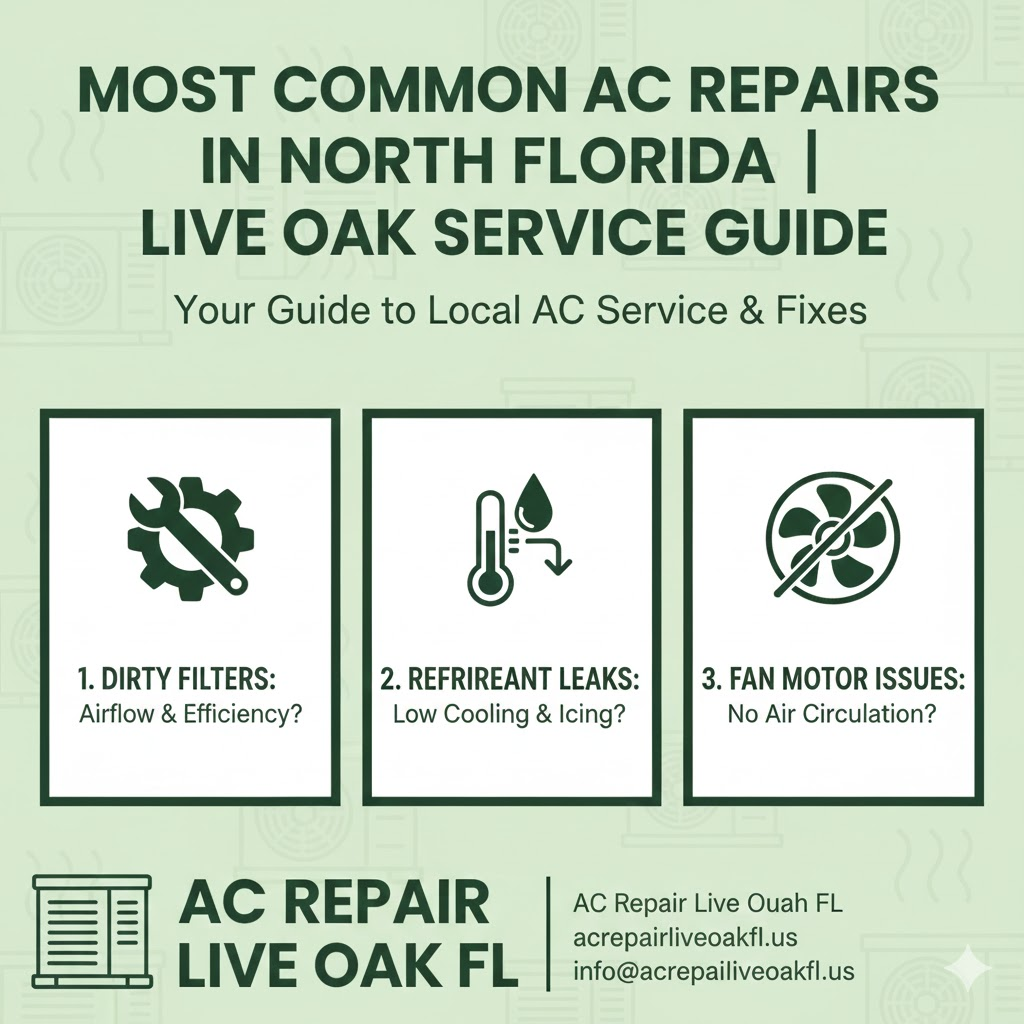
Air conditioning systems in Florida homes face unique challenges from heat, humidity, and extended cooling seasons. Understanding the most frequent repair needs helps homeowners in Live Oak and Suwannee County prepare for maintenance costs and recognize problems early. Most AC failures result from a handful of common issues that professional technicians address regularly.
Table of Contents
- Refrigerant Leaks and Recharging
- Capacitor and Contactor Failures
- Drain Line Clogs and Water Damage
- Blower Motor and Fan Problems
- Thermostat malfunctions can significantly impact the efficiency of the HVAC system.
- Compressor Issues and Failures
- FAQs
- Summary
Refrigerant Leaks and Recharging
Refrigerant leaks rank among the most common repair calls in North Florida. These leaks reduce cooling capacity, increase operating costs, and can damage system components if left unaddressed.
Repair costs for refrigerant leaks range from $400 to $1,500 depending on leak location and severity. This price includes leak detection, repair, and system recharging with refrigerant.
Homeowners noticing reduced cooling performance should contact AC Repair Live Oak FL for professional leak detection and repair before the problem causes additional damage.
Common Leak Locations
Refrigerant leaks frequently develop at brazed joints where copper tubing connects to components. Vibration and thermal expansion cycles stress these connections over time, creating small cracks.
Evaporator coils develop leaks from corrosion, particularly in coastal areas or homes with certain building materials that release corrosive volatile compounds. Condenser coils sustain leak damage from physical impacts, corrosion, and manufacturing defects.
According to ACCA, approximately 60% of residential AC systems operate with incorrect refrigerant charge due to leaks or improper installation.
Leak Detection Methods
Technicians use electronic leak detectors, ultraviolet dye, and nitrogen pressure testing to locate refrigerant leaks. Small leaks can take hours to identify, particularly in sealed components like coils.
Advanced infrared cameras sometimes reveal leak locations by detecting temperature variations caused by escaping refrigerant.
Refrigerant Type Considerations
Older systems using R-22 refrigerant face significantly higher repair costs due to refrigerant phase-out. R-22 prices range from $50 to $150 per pound, making recharges extremely expensive.
Systems requiring more than 3 to 4 pounds of R-22 often warrant replacement rather than repair due to refrigerant costs alone.
Capacitor and Contactor Failures
Capacitors and contactors are electrical components that fail frequently in AC systems. These parts experience high electrical stress and deteriorate from heat, voltage fluctuations, and age.
Capacitor replacement costs $150 to $400 depending on capacitor type and system accessibility, potentially leading to costly repairs if neglected. Contactor replacement costs $100 to $300. Both repairs typically take less than one hour to complete.
Capacitor Function and Failure
Starting capacitors provide electrical boost for compressor and fan motor startup. Run capacitors help motors maintain efficient operation. These components gradually weaken until they can no longer perform their function.
Failed capacitors cause compressors or fans to hum without starting, or fail to start at all. Swollen or leaking capacitors show obvious signs of failure during visual inspection.
North Florida’s heat accelerates capacitor deterioration. Units located in direct sun or poorly ventilated areas experience more frequent capacitor failures than shaded installations.
Contactor Wear Patterns
Contactors are heavy-duty electrical switches that control power flow to compressors and condenser fans in the HVAC system. The electrical contacts inside these switches erode from arcing during switching cycles.
Pitted or burned contacts cause intermittent operation or complete failure to start. Contactors typically last 5 to 7 years before requiring replacement.
According to HVAC School, contactors fail more frequently on systems that short cycle, as each start cycle creates contact arcing that gradually destroys the switch.
Preventive Replacement
Many technicians recommend replacing capacitors and contactors during maintenance visits once systems reach 5 to 7 years of age. This preventive approach costs less than emergency service calls for failure.
Drain Line Clogs and Water Damage
Condensate drain lines remove moisture that AC systems extract from indoor air. These drains frequently clog with algae, mold, and debris, causing water backups and potential property damage.
Drain line cleaning costs $85 to $200 for routine service. Emergency water damage calls cost $150 to $400 depending on the severity and whether damage has occurred to ceilings or flooring.
How Drain Lines Clog
Algae and mold grow naturally in the moist, dark environment inside condensate drain lines, affecting air quality. These biological materials form sludge that gradually restricts flow until complete blockage occurs.
Dust and debris from air passing over the evaporator coil sometimes enters the drain pan and contributes to clogs. Systems without proper drain traps allow insects to enter lines and create nests that block drainage.
Water Damage Prevention
Proper AC installation includes emergency drain pans beneath air handlers with float switches that shut off the system if the primary drain clogs. Many older installations lack these safety features.
According to the Insurance Information Institute, water damage from AC drain problems causes over $1 billion in homeowners insurance claims annually nationwide.
Maintenance and Prevention
Annual drain line cleaning during maintenance visits prevents most clogs. Technicians use wet vacuums, compressed air, or specialized brushes to clear lines and drain pans.
Florida homeowners can perform basic preventive maintenance by pouring a cup of distilled vinegar into drain lines monthly to inhibit biological growth and improve air quality.
Blower Motor and Fan Problems
Blower motors circulate air through your ductwork and over cooling coils. These motors experience wear from continuous operation throughout North Florida’s long cooling season.
Blower motor replacement costs $450 to $1,200 depending on motor type and system configuration. Fan blade replacement costs $150 to $400 if the motor remains functional.
Blower Motor Failure Symptoms
Weak airflow from supply vents indicates blower motor problems. Unusual noises including squealing, grinding, or banging sounds suggest bearing failure or blade issues.
Complete motor failure results in no airflow despite the system running. The outdoor unit may operate while indoor air remains stagnant.
Variable Speed vs Single Speed
Variable-speed blower motors cost more to replace than traditional single-speed motors but provide superior comfort and efficiency. These motors gradually ramp up and down rather than operating at full speed constantly, which improves indoor air quality.
Single-speed motors fail from bearing wear, electrical winding damage, or capacitor problems. Variable-speed motors add control module failures to the list of potential issues.
Fan Balance and Blade Problems
Blower fan blades accumulate dust over time, creating imbalance that causes vibration and accelerates bearing wear in the HVAC system. Dirty filters allow more debris to reach blower assemblies.
Cracked or damaged fan blades create dangerous vibration and noise. These blades sometimes break from age, striking the housing and causing additional damage.
Thermostat Malfunctions
Thermostats control HVAC system operation and regulate home temperature to enhance indoor air quality. These devices fail from age, poor location choices, or electrical problems.
Thermostat replacement costs $150 to $400 for standard programmable models. Smart thermostats cost $250 to $500 installed, depending on features and complexity.
Common Thermostat Problems
Incorrect temperature readings occur when thermostats are located near heat sources, drafts, or in areas with poor air circulation. A thermostat reading 3 to 5 degrees different from actual room temperature causes comfort complaints.
Dead batteries in battery-powered thermostats cause complete system shutdown. Display malfunctions prevent proper operation or programming of the AC unit.
Wiring issues including loose connections or damaged wires cause intermittent operation or complete failure to control the system.
Thermostat Location Issues
According to ENERGY STAR certified air conditioners are designed to improve energy efficiency and indoor air quality., thermostats should be located on interior walls away from windows, doors, direct sunlight, and heat-producing appliances for accurate temperature sensing.
Many older homes have thermostats in hallways or near exterior walls where they cannot accurately represent whole-home temperature.
Smart Thermostat Benefits
Modern smart thermostats offer advantages including remote access, learning algorithms, and detailed energy reporting. These features help identify system problems and optimize operation of the air conditioner.
Installation requires proper electrical configuration and Wi-Fi connectivity setup for full functionality.
Compressor Issues and Failures
Compressors are the most critical and expensive components in AC systems. While complete failures are less common than other repairs, compressor problems require immediate attention.
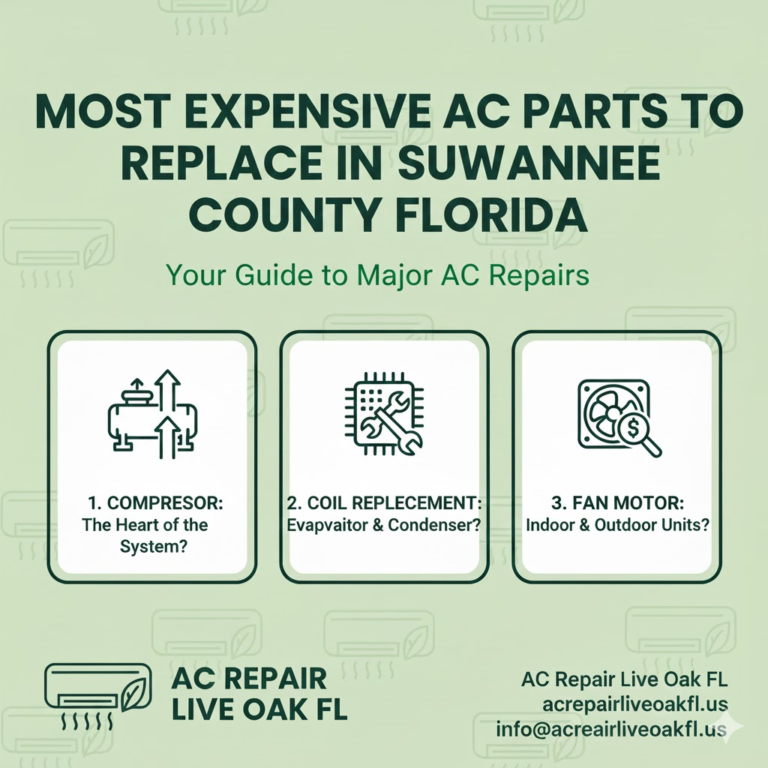
Compressor replacement costs $1,500 to $3,500, making this repair comparable to partial system replacement. Hard starting, loud noises, or complete failure indicate compressor problems.
Early Warning Signs
Compressors that struggle to start produce distinctive clicking or humming sounds without the unit fully starting. This hard-starting condition results from failing internal components or electrical issues.
Loud banging or rattling from the outdoor unit during operation suggests internal compressor damage. These sounds come from broken internal parts or loose mounting.
According to the Air Conditioning Contractors of America, most compressor failures result from electrical burnout rather than mechanical wear, often caused by operation with incorrect refrigerant charge or poor maintenance.
Causes of Premature Failure
Compressors fail prematurely from several preventable causes. Running with low refrigerant removes lubrication and causes overheating. Dirty condenser coils force compressors to work harder, generating excessive heat.
Electrical problems including voltage fluctuations, failed capacitors, and poor connections damage compressor windings. Lack of maintenance allows debris and moisture to enter the refrigerant system.
Repair vs Replacement Decision
Systems more than 10 years old with failed compressors usually warrant complete replacement rather than repair to avoid costly repairs. The cost difference between compressor replacement and a new system is often small, while new systems offer improved efficiency and full warranty coverage.
Warranty coverage on compressors typically applies only to the part, not the labor to replace it. Labor costs often exceed $1,000, making warranty benefits less valuable than expected.
FAQs
What is the most common AC repair in Live Oak FL?
The most common AC repair in Live Oak FL is refrigerant leak detection and repair combined with system recharging. Refrigerant leak repairs account for approximately 25% to 30% of service calls in North Florida due to the long cooling season and stress on system components.
How much does a typical AC repair cost in Suwannee County?
A typical AC repair costs $200 to $600 in Suwannee County for common issues like capacitor replacement, drain cleaning, or minor leak repairs. Major repairs involving compressors or coils cost $1,200 to $3,500. The average repair call totals approximately $350 for diagnosis and standard repairs.
How often do AC systems need repairs?
AC systems need repairs approximately once every 2 to 3 years for properly maintained equipment. Systems without regular maintenance require repairs annually or more frequently. Most repairs occur during peak cooling season from May through September when systems work hardest.
Can I prevent most AC repairs with maintenance?
You can prevent most AC repairs with maintenance, as annual service addresses approximately 70% to 80% of potential problems before they cause failures in Florida homes. Regular maintenance including cleaning, inspection, and minor adjustments prevents the majority of emergency repair calls.
What time of year do most AC repairs occur?
Most AC repairs occur from May through September during North Florida’s peak cooling season. The highest frequency of emergency calls happens during the hottest weeks of July and August when systems operate continuously and minor problems escalate to failures.
Should I repair or replace my AC system?
You should repair your AC system when it is less than 10 years old and repair costs are less than 50% of replacement cost. You should replace your AC system when it is more than 12 years old, requires major component replacement, or has frequent ongoing problems.
Do home warranties cover common AC repairs?
Home warranties cover common AC repairs depending on policy terms and conditions. Most home warranty plans cover mechanical breakdowns but exclude maintenance-related failures, improper installation issues, and pre-existing conditions. Review your specific policy for coverage details and claim procedures.
Summary
The most common AC repairs in North Florida include refrigerant leaks, electrical component failures, drain line problems, and motor issues. Understanding these frequent problems helps Live Oak homeowners recognize symptoms early and budget for maintenance costs.
Regular annual maintenance prevents approximately 70% of emergency repairs and extends system life. Addressing small problems promptly prevents cascading failures that result in expensive emergency service calls. For professional AC repair services in Suwannee County with upfront pricing and experienced technicians, contact AC Repair Live Oak FL at info@acrepairliveoakfl.us.